
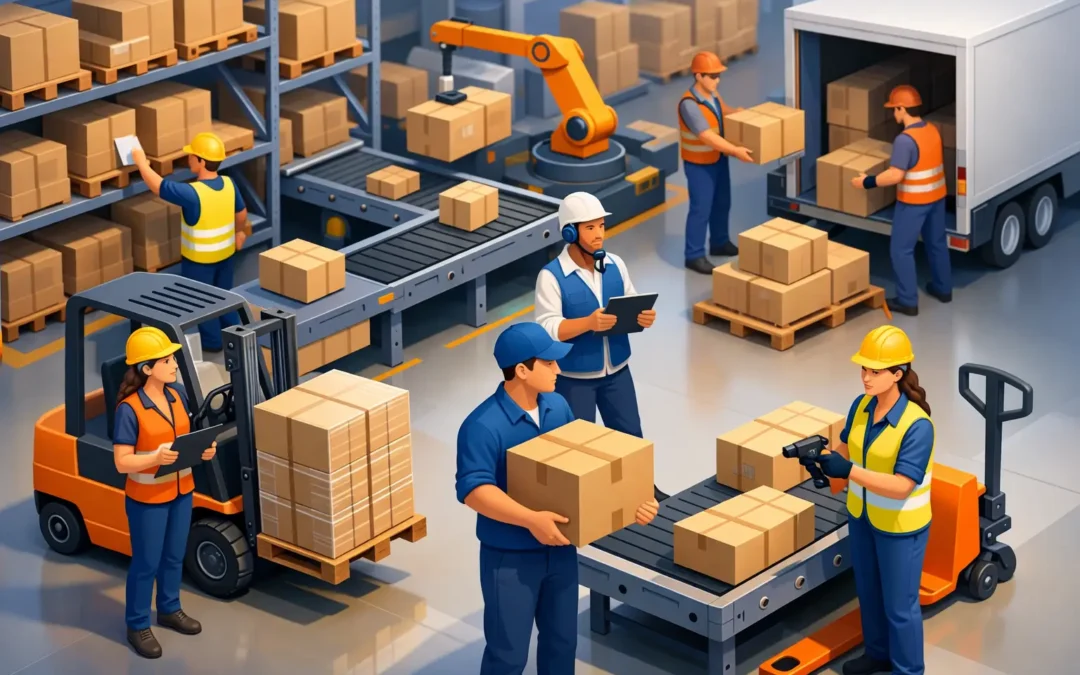
A warehouse can have stock on the floor, orders in the system and trucks booked at the dock, yet still fall behind because the right people are not on shift. The best staff for warehouse operations are not simply available workers. They are people matched to the workload, equipment, safety requirements and pace of your site.
For warehouse managers, the goal is straightforward: maintain safe, accurate output across every shift without carrying unnecessary labour costs or creating an administration burden for supervisors. Getting the workforce mix right is what keeps orders moving when volumes lift, absenteeism hits or a new customer contract starts.
The best staff for warehouse operations depend on the task
There is no single ideal warehouse worker for every operation. A high-volume e-commerce fulfilment centre needs a different team from a wholesale distribution warehouse, cold storage facility or manufacturing dispatch operation. Start with the work that must be completed, the peak periods that put pressure on the site and the consequences of an error.
Pick packers are central to most fulfilment operations. The strongest candidates can read pick slips or use RF scanning equipment, follow location systems, maintain a consistent pace and pack orders accurately. Speed matters, but accuracy matters just as much. A fast picker who creates regular dispatch errors can quickly cost more than they produce through credits, returns and rework.
Forklift drivers require a more specific assessment. A current high risk work licence is only the starting point. The right driver must be confident with the type of equipment used on site, whether that is a counterbalance forklift, reach truck, order picker or double-deep unit. They also need sound judgement around pedestrians, narrow aisles, racking and loading zones.
Goods-in and receiving staff need strong attention to detail. They check quantities, identify damaged stock, complete system receipting and ensure products are directed to the correct location. When receiving falls behind or records are inaccurate, every downstream team feels it – from replenishment and picking through to inventory control.
At a higher level, leading hands, team leaders and warehouse supervisors coordinate labour, prioritise workflow and respond when a shift does not go to plan. They need practical floor experience, but they also need to communicate clearly, manage performance and keep safety standards in place when pressure builds.
Hire for reliability, then match the technical capability
Technical skills can often be taught. Reliability is harder to create after a worker starts. For operational roles, attendance, punctuality, willingness to follow process and the ability to work safely are core requirements, not soft extras.
A good warehouse employee understands that their task is part of a chain. A picker who does not replenish stock, a receiver who skips a discrepancy or a loader who ignores the load plan can delay the whole operation. Look for people who take ownership of their area and communicate issues early rather than leaving problems for the next shift.
The practical capabilities to assess should reflect your site. This may include RF scanning, voice picking, WMS experience, manual handling, container unloading, pallet wrapping, stocktake work, dispatch paperwork or inventory investigation. Do not over-specify every role, particularly during a short-term peak. If a worker has the right attitude, relevant warehouse experience and a clear induction, they may become productive quickly.
However, some requirements should not be compromised. Forklift work, specialised machinery, food handling, cold-room work and hazardous goods environments require appropriately qualified and experienced staff. The labour hire provider or internal hiring team should verify licences, work rights and relevant experience before deployment.
Build a workforce around the flow of work
The best warehouse staffing plan is built around workload patterns, not an arbitrary headcount. Review order cut-off times, delivery windows, inbound schedules, seasonal demand, leave periods and the hours when bottlenecks regularly occur.
For example, a business may need extra pick packers in the morning to clear priority orders, then more dispatch staff late in the day to meet carrier collection times. Another site may need a stable afternoon shift of forklift drivers and replenishment workers to prepare the pick face for the following day. Staffing every hour in the same way is rarely the most efficient option.
A core permanent team gives a warehouse continuity, product knowledge and leadership on the floor. Flexible labour can then absorb volume spikes, promotional campaigns, stocktakes, annual leave, unplanned absences and project work. This approach protects service levels without forcing the business to retain a full peak-season headcount year-round.
The balance depends on your operation. A stable warehouse with predictable volumes may rely mainly on permanent staff and use labour hire for cover. A fast-growing business, third-party logistics provider or seasonal retailer may need a larger flexible workforce that can scale at short notice. Neither model is automatically better. What matters is whether the roster supports output without leaving the team exposed when demand changes.
Give site-ready workers a clear start
Even capable workers need a structured site induction. Most early productivity issues are not caused by a lack of effort. They happen because workers have not been shown the layout, work priorities, systems, safety rules or expected standard.
Before a shift begins, workers should know where to report, what PPE is required, who their supervisor is, how breaks operate and what to do if they identify a safety risk or stock discrepancy. They should also understand the measurable expectation for the role. That could be pick accuracy, cartons processed, pallets received, orders despatched or a defined task list.
Supervisors should avoid assuming that a worker with warehouse experience knows the local process. Every warehouse has different racking layouts, staging areas, scanning rules and traffic management plans. A focused induction reduces avoidable errors and shows workers that the site is organised.
For urgent bookings, provide the labour provider with practical information before workers arrive: shift times, role duties, required licences, physical demands, PPE, public transport or parking considerations, and the experience level needed. Specific briefs produce better matches than a generic request for warehouse hands.
Keep compliance and administration under control
Labour flexibility should not mean reduced control. Employers remain responsible for providing a safe workplace and clear site direction, while labour hire arrangements also involve employment, payroll and regulatory obligations that need to be handled correctly.
For warehouse placements, this means confirming that workers have the right to work in Australia, appropriate licences where required, relevant safety information and an understanding of the role. In New South Wales, Victoria and Queensland, labour hire licensing requirements may apply depending on the arrangement and location. A provider that understands these obligations can reduce risk and remove a substantial amount of employment administration from the client team.
Accurate timesheets, award interpretation, payroll, superannuation, workers compensation and shift records also need consistent management. These are not back-office details when a site is running seven days a week. Gaps in administration can become payroll disputes, compliance exposure and avoidable management time.
Measure the workforce by operational outcomes
Warehouse staffing should be reviewed using data from the floor, not just the number of people supplied. Track attendance, start-time reliability, pick accuracy, units per hour, damage rates, safety observations, overtime, agency conversion rates and supervisor feedback.
Use the information carefully. Units per hour may be useful for comparable tasks, but it is not a complete measure of performance. A worker assigned to oversized items, problem orders or replenishment will not produce the same scan count as someone picking small, fast-moving products. Compare like with like and look for patterns over several shifts.
Regular feedback between the warehouse manager and staffing partner improves results quickly. If a worker performs well, request them again and build familiarity with the site. If a placement is not suitable, address it early and clearly. The objective is not to make do with whoever arrives. It is to build a dependable pool of known workers who can step into the operation with confidence.
Recruit Hub supports warehouse teams with vetted, site-ready workers for ongoing shifts, urgent cover and changing volume requirements. The practical difference comes from understanding what the site needs before the shift starts, then remaining accountable once workers are deployed.
The right warehouse team gives supervisors room to manage the operation rather than constantly chase coverage. Define the work, communicate the standard and use staffing support that can respond when the roster changes. That is how a warehouse stays productive when the pressure is on.